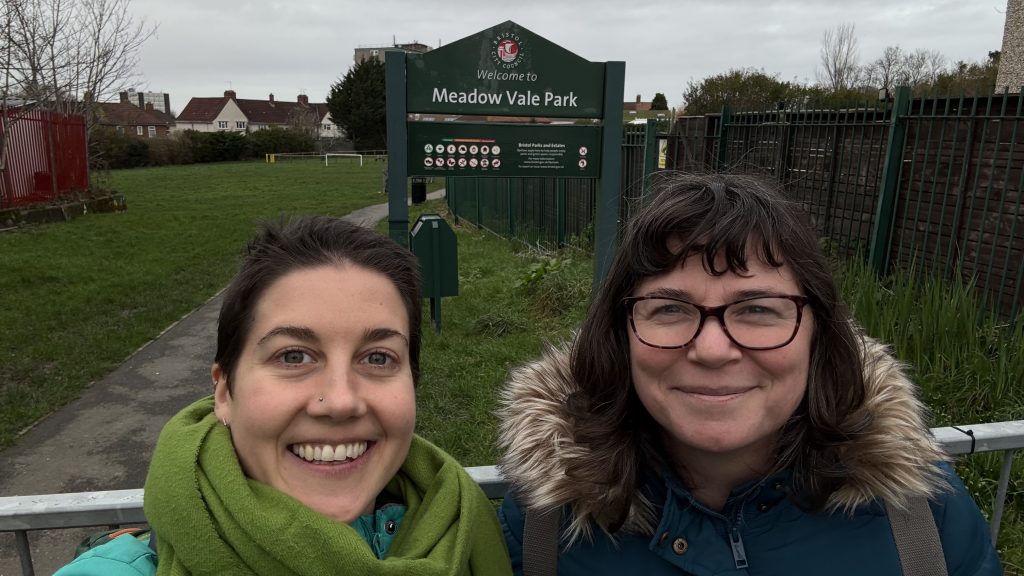
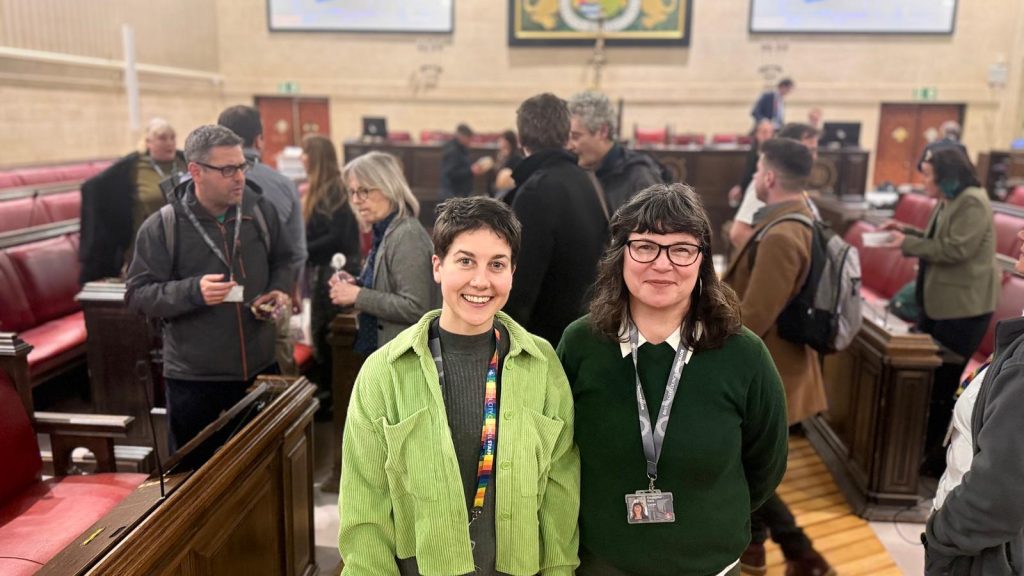
Cara Lavan was delighted to be elected as Councillor for St George Central in May 2024 alongside Abi Finch.
Cara's other Council responsibilities include sitting on the Public Health and Communities Committee, the Police and Crime Panel, the Corporate Parenting Panel and the Health Overview Scrutiny Committee.
September 2026: Abi oversees Council recognition of the rights of the River Avon at Full Council
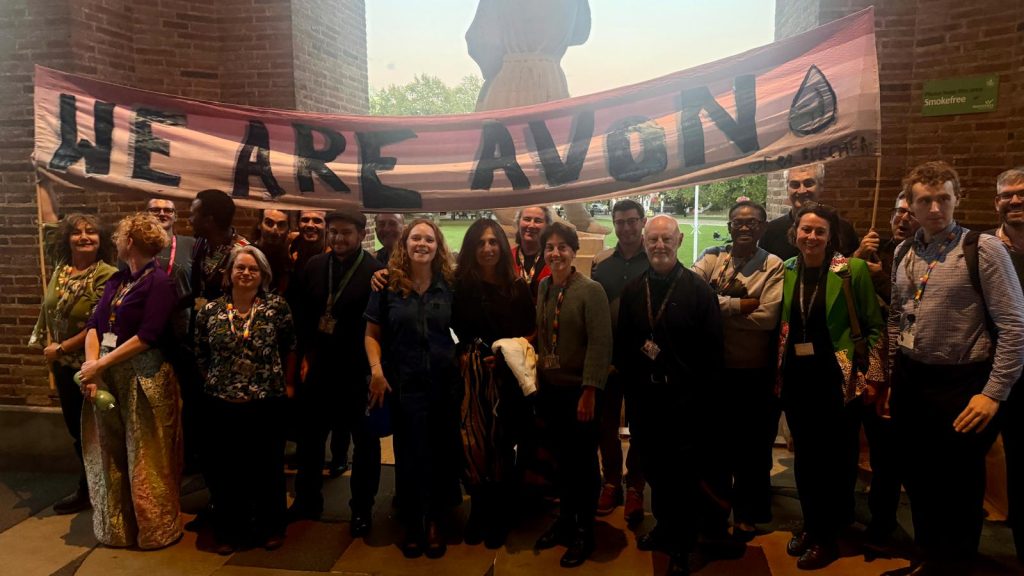
On Tuesday 9th Sept, Bristol City Council voted to endorse the River Avon Charter at Full Council with all four political parties supporting it. As Chair of the Environment and Sustainability Committee, Abi introduced the vote.
Green Councillors including Lisa Stone, Ani Townsend, Sibusisio Tshabalala, Ellie Freeman, Martin Fodor, Fi Hance, Abi Finch, Cam Hayward, Tim Wye, Lorraine Francis, Emma Edwards, Jerome Thomas, Rob Bryher Patrick McAllister and Barry Parsons celebrate the river’s rights. Photo by Cllr Cara Lavan
This is part of a growing movement nationally and internationally to recognise the rights of nature and the rights of rivers.
We Are Avon campaigners have been working on the Charter with councillors, from local authorities along the River Avon, for a number of months including Green councillors Abi Finch, Lisa Stone and Martin Fodor. Now the Avon River Charter has received support or endorsement from a number of council’s including BANES and South Glos.
Abi said “It honestly has been inspiring to be involved with this process. Getting to meet with dedicated campaigners, volunteers and citizen scientists who have given up their time to protect the Avon. But also getting to work closely with some of our own council officers who care deeply about the health of the Avon and the need to protect and enhance the biodiversity in and around the River.
It’s tempting to see endorsing this Charter as an end goal but it’s far from it. Over the past couple of years Bristol City Council has shown its dedication to protecting the health of our rivers. This is the next step in that journey. But we need to look ahead to how we can continue this commitment to protecting our rivers going forwards.”
The Avon River Charter recognises 7 rights for the River Avon and the waterways that flow into it:
Right to exist, thrive and evolve naturally
Right to flow sustainably
Right not to be polluted
Right to biodiversity integrity
Right to regeneration and restoration
Right to cultural and community connection
Right to representation and advocacy
Recognition of the river’s rights strengthens the protections citizens and the Council can give it against corporate entities.
July 2026: Cara puts forward motion which makes Bristol a City of ‘Harm Reduction’
Cllr Cara Lavan brought a motion which gained national and international news coverage and was supported by Lib Dem and Labour Councillors
As someone who has been bereaved through drug overdose poisoning, I’m acutely aware that the number of overdose deaths nationwide and also in Bristol have risen every year since 2010 – four years before my own partner, Jake Coe, became one of those statistics.
In 2024, seven people died in Bristol and the surrounding area every month.Many of these deaths were preventable.
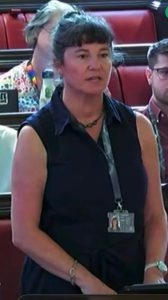
Cara making her speech at full council, July 2026
That’s why I, supported by the Green Councillor Group, brought a motion to Full Council calling for Bristol to be an official City of Harm Reduction.
A harm reduction approach acknowledges that we can’t stop people from taking drugs (including alcohol), so we need to find ways to make it safer.
Currently, anyone who wants to access illicit drugs can do so within a relatively short space of time, either online or in person.
Residents in my ward know perfectly well where the local drug dealing hotspots are and often ask why the police don’t act on this information. At the same time, they understand the concept of the children’s game ‘Whack-A-Mole’. As soon as one drug dealer is caught, another springs up in their place.
I know that residents in many of our communities struggle with witnessing open drug use and the drug detritus that is often left behind. In one week in March in East Bristol, I witnessed three different episodes of people injecting themselves with drugs in broad daylight. All of these took place within 150m of a primary or secondary school.
Studies show that over 70% of people who inject drugs experienced severe childhood trauma: domestic violence, neglect, sexual and emotional abuse. Drug use often begins as a form of self-medication for people to manage the fallout from that trauma.
About half of drug overdose poisonings involve opioids, thougha recent reportsaid the figure could be much higher, due to the fast-increasing prevalence of synthetic opioids,such as nitazenes and orphines, in the illicit drug supply.
These drugs are up to 500 times stronger than heroin and just a trace amount can be lethal. A fatal dose can be so small that many coroners also believe they are not being included in drug overdose figures.
‘Harm reduction’ means treating drugs and drug users medically. It is a compassionate approach that has been proven to save lives and improve health outcomes far more effectively than criminalisation, or the threat of it, does.
There is good work going on in Bristol, including by the Bristol Nights project, but it happens slowly and it requires multi-agency collaboration. Night time economy venues, the police, student organisations, drug treatment providers and public health all need to work together to bring about small changes. The way the Misuse of Drugs Act (1971) is applied often works against these health-based changes.
Bristol’s monthly drug checking facility and the police’s drug diversion schemes have put our city firmly on the map as a leading light in harm reduction – and make us a beacon for other cities in the UK and beyond.
To take this further, the Green Party would like to see an enhanced and co-ordinated approach to addressing drug related issues in Bristol.
We are calling for more frequent drug checking and for safer injecting sites or overdose prevention facilities. These are places where people who inject drugs could go to do so under medical supervision.
There are over 100 such sites around the world, and no one has ever died while using one. In addition, many people receive a medical intervention at the time of their drug use, which can lead to further positive health outcomes.
Carla Denyer MP and the Leader of the Council, Tony Dyer have both written to the Home Secretary to request permission to provide an overdose prevention centre, but were told this will not be possible under the Misuse of Drugs Act 1971.
They say this even though there is such a facility in Glasgow, which operates under the same laws as Bristol.
In the longer term, a Green Government would go much further, with a policy of legalising and regulating drugs. In recent elections, other political parties have tried to smear this by scaremongering and spreading misinformation about it.
The truth is that in practice, our national policy would tackle our drug problems root and branch rather than tinker around the edges while health and policing costs increase year after year and overdose deaths continue to rise.
The illicit drug market would be decimated as those who need or want drugs could go to doctors or pharmacists and receive a health intervention before being prescribed or buying the drugs they want.
The 50,000 children a year currently exploited by organised crime to sell and transport drugs would be protected.
Billions could be raised in tax from the sale of less harmful drugs. This would be spent on drug treatment and drug education.
Billions would be saved in NHS, policing and prison costs.
And tens of thousands of lives would be saved as people could access a safe supply of what they need under medical supervision, rather than down dark alleyways and on street corners in a market that encourages pyramid sales and sales calls.
The heart of the matter is that drugs are a health issue, not a criminal one – and it is only by treating them that way, that we can begin to tackle the problems associated with them.
Thousands of families each year should not lose loved ones because they were shamed out of getting help they desperately needed and the law made them too afraid to ask for it.
June 2026: Communities leading the way on climate action in Bristol
A post from Abi Finch in her new role as Chair of the Environment and Sustainability Committee.
Over the past five years, something special has been happening across Bristol.
The Community Climate & Nature Action Project has been quietly building a movement – one rooted in local communities, shaped by lived experience and focused on creating a healthier, fairer city for everyone.
As a council we are well aware of the importance of working with communities. This project shows what that looks like in practice – and why it matters.
A different kind of climate action
The project, led by Bristol Climate & Nature Partnership and supported by Bristol City Council and partners, has taken a place-based approach to climate and nature action.
That means supporting communities to design their own plans, develop their own solutions, and lead change in ways that make sense locally.
Built a network of local leaders and organisations
Delivered practical projects on the ground that benefit residents directly
Helped some of the groups develop and build capacity and deliver a wider range of programmes for their communities
Of the 17 community climate and nature action plans, 11 represent neighbourhoods across the city, including many in areas of high deprivation, and six represent our diverse communities including Disabled people, Asylum seekers and refugees, under-represented young creatives, older people and women from marginalised communities.
What’s particularly powerful is that this work doesn’t treat climate as a standalone issue. It connects it to other things that people care about day-to-day, like jobs, health, food, transport and their quality of life.
The impact of the project is clear to see.
Across the project:
More than £4.3 million of additional funding has been brought into Bristol
550+ community activities have been delivered
18,300 people have taken part in climate and nature activities
Up to 75 per cent of participants were new to climate action
On the ground, this has translated into real change. Over three years, six on-the-ground community-led projects have resulted in:
Hundreds of people improving energy efficiency in their homes
Over 1,800 trees have been planted and new green spaces created
Community-led food growing and composting projects
New green skills, training opportunities and jobs
A measurable environmental impact, including a reduction of 382 tonnes of CO₂ emissions.
However, this project is about more than numbers. What stands out most is how it has helped broaden who is recognised as leading climate and nature action in the city.
The project has been proactive in opening up opportunities for people and groups who are often underrepresented – including Disabled people, refugees and migrants, older people and neighbourhoods facing some of the most severe inequality in the city.
In many cases, these weren’t people already engaged in climate conversations. Yet they’ve been central to shaping local plans and leading projects.
A good example is the Climate and Disability programme – one of the first of its kind in the UK – which we hope will ensure Disabled people’s voices become embedded in policy and planning across the city.
This is what a just transition looks like in practice – tackling climate change in a way that reduces inequality, rather than reinforcing it.
Influencing how we work as a city
The impact hasn’t just been at community level. Insights from local action plans are now feeding into city-wide policies and strategies – from transport to wider climate programmes.
The project has also introduced new ways for communities to shape decisions, including a Community Leadership Panel on Just Transition, giving seldom heard groups a direct voice in major initiatives.
The panel has reviewed and provided insightful recommendations for 11 projects and helped to develop trusted connections between community leaders, strategic climate initiatives, and council officers. Council officers have presented to eight of the panel review sessions.
Alongside this, a strong network of organisations has been created, helping to align efforts across the city and build momentum for change to address the climate and mitigate against its effects.
In short, this work is beginning to change not just what we do but how we do it.
Why this matters and what happens next
We know that most people care about climate change, but it can feel distant or overwhelming.
This project shows that when action is local, practical, inclusive and connected to people’s everyday lives it becomes something very different. Something people want to be part of.
It also shows the vital role that community organisations play as trusted local networks, helping to make engagement, and meaningful action, possible.
The next phase is already underway. Thanks to National Lottery funding, the model is now being scaled across the wider West of England, including Bath & North East Somerset, North Somerset and South Gloucestershire.
The programme will run to 2028 and will:
Support another six communities to develop their own action plans
Expand the community leadership model across the region
Continue influencing regional and national policy
In Bristol, this means building on what we’ve started – turning more community ideas into real projects, and ensuring local priorities continue to shape our approach.
A shared effort
I’d like to recognise the role of the Climate & Nature Partnership in the way they have managed the entire Community Climate & Nature Action programme. The Partnership’s strength has been its ability to convene diverse partners, build trust across sectors and ensure that communities are at the heart of the project.
Ultimately, this work is a reminder that the solutions to the climate and nature crisis don’t just sit in strategies or policies. They are already underway in our communities.
Our role as a council is to enable, support and work alongside those communities, helping unlock the ideas, energy and leadership that already exist across the city.
If the last five years are anything to go by, this approach doesn’t just deliver environmental benefits and a healthier, cleaner Bristol. It also supports local jobs and the economy, creating opportunities for people and businesses to thrive, while bringing communities together and building stronger, fairer and more connected neighbourhoods.
May ’26: New Roles for Abi and Cara – in addition to being ward councillors
Abi and Cara outside one of the green spaces in their ward.
This text is from the monthly column Cara and Abi write for the Kingswood Voice newspaper.
There have been some changes in Bristol City Council, so we wanted to give you an update on our new roles and what we’ll be working on. Alongside being your ward councillors and supporting and representing you, we both hold other roles.
Last month was the council’s Annual General Meeting where our roles are agreed for the year ahead. One big change is that Abi has now taken on the role of Chair of the Environment and Sustainability Committee. This is the committee that oversees the council’s response to the climate and ecological emergencies, residential waste and recycling collections and the council’s approach to fly-tipping and street cleansing. One of Abi’s priorities for the new role is updating the council’s approach to waste and resources with a focus on tackling the causes of fly-tipping and encouraging more reuse and repair.
To make time for the new role Abi has stepped down from chairing our Area Committee, where local funding decisions are made for the wider St George area. She has also stepped down from the Public Rights of Way and Greens committee, the decision making body for dedicating new public rights of way and town/village greens. Abi is still very much committed to supporting St George Central residents, but the new Chair role will take up a large chunk of her time and there’s a lot to learn to get settled into the role, so your patience whilst she gets up to speed is very much appreciated.
Cara continues to sit on the Public Health and Communities Committee which oversees things like health commissioning, sports and leisure, community cohesion parks, allotments, cemeteries, libraries and environmental health. She also sits on the Police and Crime Panel, which meets regularly in Taunton. She attends the Combatting Drugs Partnership and continues to work to promote life-saving harm reduction measures alongside the need for drug law reform.
She has taken a lead on allotments and works closely with the Bristol Allotment Forum.
Cara has just stepped back from two years on the Corporate Parenting Panel, which scrutinises how the city looks after children in the care system, in order to be able to take over the role of chairing our Area Committee. In addition, Cara is in her third year as Deputy Leader of the Green Councillor group and still works part time as a film maker and child advocate.
We hope that gives you a flavour of what we’re up to in our wider councillor roles alongside our local work with individuals and communities in the ward.
Two Years in Administration -and Serving as St George Central Councillors
Abi and Cara in the Council Chamber just after the 5 hour long, 2026 budget meeting had finished.
This text is from the monthly column Cara and Abi write for the Kingswood Voice newspaper.
May 2026 is the two-year anniversary of the Council’s change to a committee system under a Green-led administration. It’s also two years since we’ve had the privilege to be your local councillors. As Green Council Leader Tony Dyer said when we delivered the 2026/27 budget for the city, we have been “making sure we get the basics right while also investing in Bristol’s future”.
As your local councillors, we’ve been working solidly to understand and meet as many needs as possible.
This year’s budget will invest over £850m into the city; delivering core services for children and adults, providing decent affordable homes, enabling safer and better transport, protecting our environment, looking after our children in care and creating improved educational performance.
Some of our citywide highlights include bringing our council housing stock up to scratch by getting long overdue repairs completed, protecting the library service, investing to explore re-opening public toilets, putting additional funds into dealing with fly tipping, protecting the cultural investment programme, over-seeing the roll out of lamp post EV charging points, shortening waiting times for pedestrians at crossings, opening a youth hub and a new school for children with additional needs.
In 2025 we built more affordable homes than any other city outside London. We are also one of the only Councils in the country to provide a Council Tax Reduction Scheme, which supports those least able to pay their bills.
Under Green leadership, the Council’s planning department has been taken out of special measures and we are investing £300,000 in recruiting more planning enforcement officers to keep developments within the conditions of their planning approval.
We know all of this is important to our residents.
Over the next two years we will invest in improving recycling with better processing facilities and supplying improved recycling containers to households.
There isn’t enough space here to address all the work we’ve been doing, and we do know that there are things that still need work, such as the East Bristol Liveable Neighbourhood low traffic scheme.
Locally, we’ve held a regular monthly surgery, answered hundreds of emails from residents, reported more potholes and fly tipping hot spots that either of us thought possible and attended community groups and meetings of all descriptions. We are currently also undertaking a ward wide survey on parking.
We are loving getting to know the area and the residents more deeply.
Our May surgery will be on the 13th, 2:30-4pm at the Meadow Vale Community Centre small hall and the two new local PCSO’s for the area, Chloe and April will attend to hold a joint surgery with us. So if you have any queries or concerns about crime in our area, do please come along.
Short Reel Showing some of Cllr Cara Lavan and Cllr Abi Finch’s 2025 activities
Cara and Abi take great pride in being very active and engaged councillors – so much so, that they often forget to document everything they do. This reel was made at the end of 2025 as a bit of a fun catch up.