Sibusiso Tshabalala
Councillor for CentralSibusiso Tshabalala is a Bristol civic leader connecting resident voice, public benefit and community investment to build fairer, more democratic neighbourhoods and city centre.
More about Sibusiso

menu
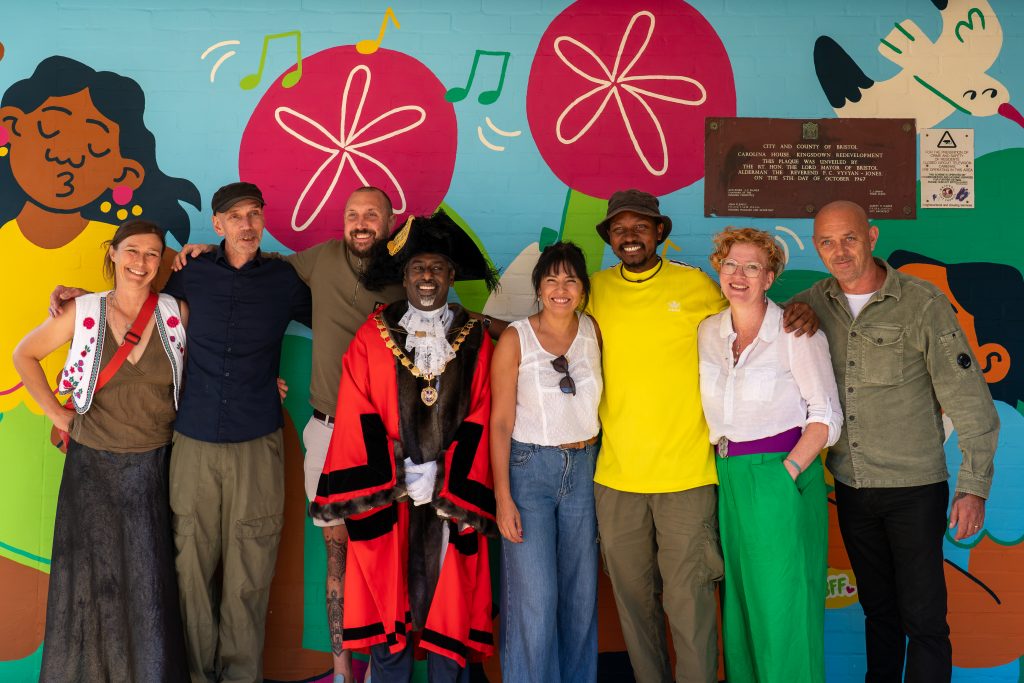
If you stand at the top of Dove Street on a clear evening, you are met with one of the most spectacular views across Bristol’s city centre. Yet for too long, the physical environment at street level has not reflected the warmth, resilience or potential of the community that lives here. The estate’s steep topography, concrete infrastructure and fragmented public spaces have created real challenges. Some green areas have been difficult to access and underused. Pathways have felt disconnected. Prominent walls have repeatedly attracted tagging, while redundant garages and communal spaces have offered little back to the community. But something different has been taking shape.
Through work with residents, the Dove Street Community Forum CIC and students from the University of the West of England’s Master of Architecture programme Hands-On-Project, we have been developing a much more connected approach to neighbourhood improvement that leads beyond projects and into shaping a neighbourhood vision.
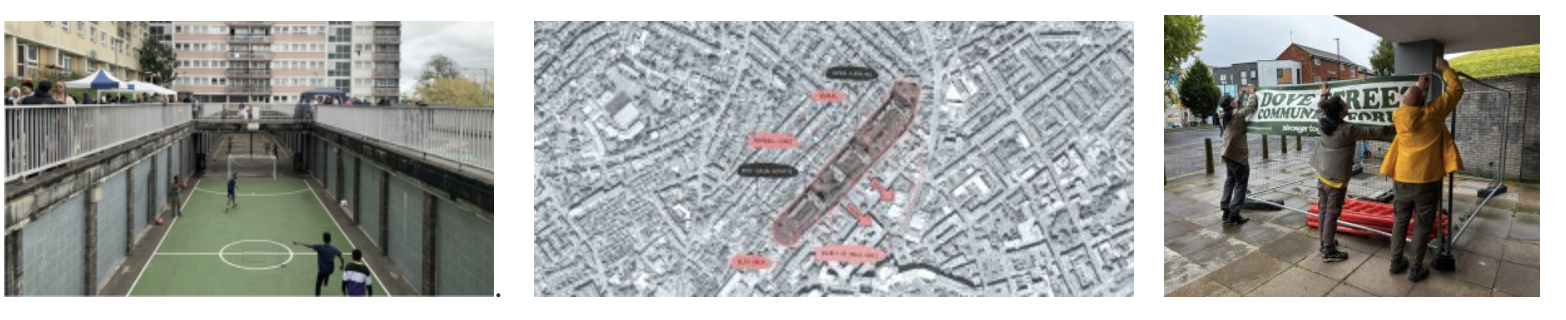
That work has now helped secure £232,000 of confirmed Community Infrastructure Levy investment for Dove Street, £182,000 for the Community and Pet Park and £50,000 for the Dove Street Urban Gallery and murals programme. The investment matters. But the more important story is how residents are helping shape what that investment is for. For me, this is what active localism looks like, targeted investment, resident knowledge and designers working together to strengthen both the physical environment and the community around it.
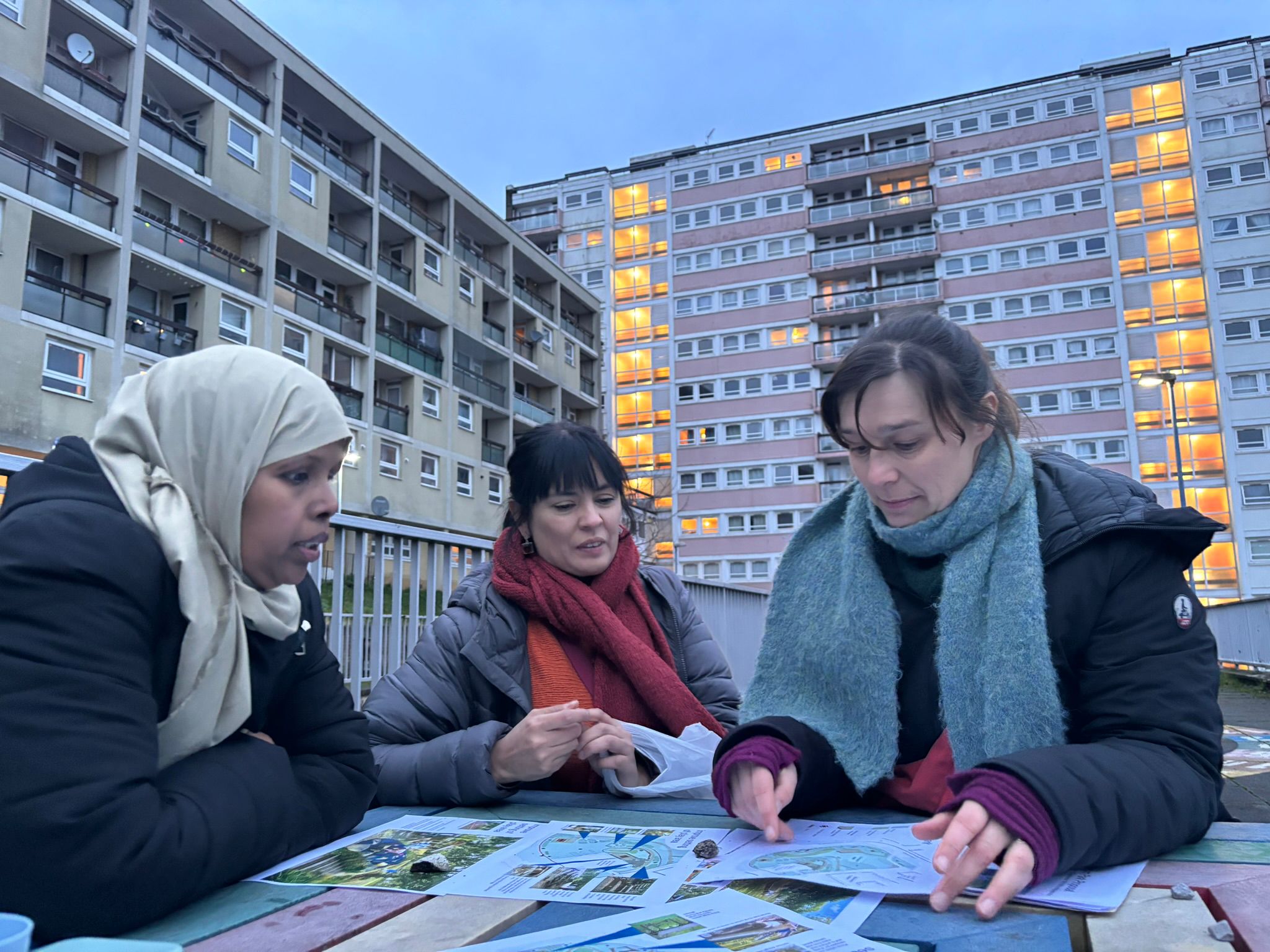 One of the clearest priorities to emerge from our engagement has been Dove Street’s central green space.
Historically, access has been constrained by a single entrance and fencing, while the steep landscape has made parts of the area difficult to use throughout the year. Some embankments have become places where litter accumulates, and the relationship between the children’s play area, the wider green space and the dog area has needed reconsideration.
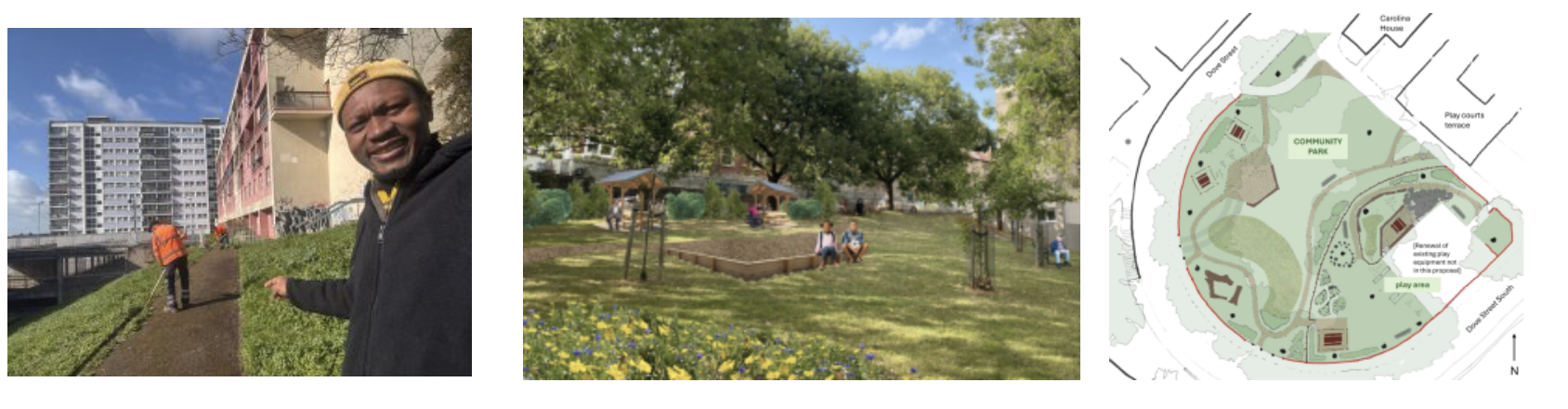
The Dove Street Community and Pet Park, backed by £182,000 of CIL investment, gives us the opportunity to look at the space as one connected neighbourhood asset. The emerging design opens access from more than one direction and introduces better all-weather pathways.
The children’s play area can expand into the surrounding landscape rather than remaining isolated behind fencing. The slope itself can become part of the play environment, using the existing topography and mature trees creatively rather than seeing them as obstacles. A new level gathering area can create somewhere for families to sit, eat and meet, while wildflower areas, native hedging and other biodiversity measures can strengthen the natural environment.
Importantly, the plan also recognises that different residents use the space differently. A dedicated dog area can sit alongside children’s play and communal green space without one use dominating the other. Taken together, these interventions are about much more than improving a park. They are about creating the conditions for everyday community life.
When children are playing, families are gathering, neighbours are walking through the space and people feel confident using it throughout the year, the environment naturally becomes more welcoming and more connected.
Rather than relying solely on efforts to design out anti-social behaviour, we can also design in positive activity.
That is an important shift.
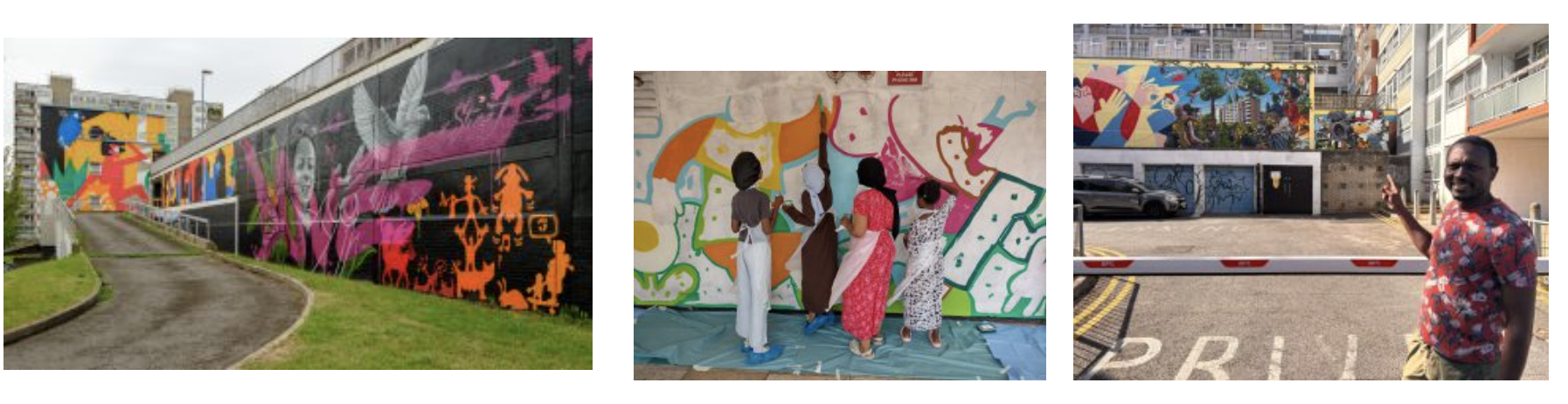
The same thinking sits behind the Dove Street Urban Gallery. Some of the most visible walls and entry points around the estate have long been affected by repeated tagging and peeling paint, particularly around key approaches from Jamaica Street and Nine Tree Hill. The traditional response would be to repaint those walls and then repeat the process when graffiti returns.
We wanted to ask something different, What if the walls themselves became part of the neighbourhood’s identity Through a further £50,000 of CIL investment, we developed a coordinated mural programme across Dove Street.
The intention is not to impose generic public art on the estate. The locations have emerged through resident conversations, neighbourhood walks and an understanding of how people actually move through Dove Street. The programme focuses particularly on highly visible walls and gateways, spaces that currently shape first impressions of the estate but could instead become points of pride.
Across the estate, murals can create a visual thread between different buildings and approaches, helping reconnect Dove Street with the wider creative landscape of Stokes Croft and City Centre.
That matters because public art can do more than improve appearance. It can help change the story a place tells about itself.
The question moves from “How do we stop people tagging this wall?” to “What do we want this wall to say about our community?” That is where art becomes place-making. And where place-making begins to create ownership.

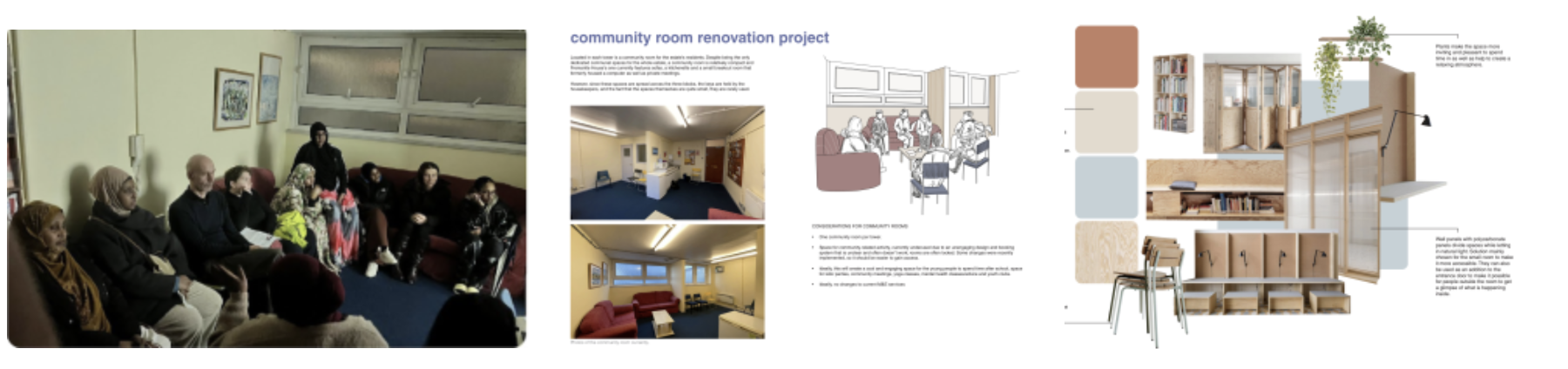
Physical improvements alone cannot create community power. People also need somewhere to meet. Residents have consistently raised the lack of an accessible indoor community space, often leaving them to meet in their homes or rely on temporary arrangements. As a member of the Homes and Housing Committee, I have worked to improve access to council communal rooms and make the booking process more practical.
An underused ground-floor room on the Dove Street estate presents an opportunity for meetings, homework clubs, celebrations, coffee mornings and engagement with local services. Residents have also highlighted that the design and layout of many council communal rooms need updating. Ideas developed with UWE Architecture students have helped explore how the space could become more welcoming, flexible and shaped around how residents would use it.
The Dove Street Community Forum CIC provides the resident-level structure to bring the space and its activities to life. The developing Area Forum Model aims to connect estate-level organisation into the wider neighbourhood, not replacing it, but building community power from the estate outwards.
The work at Dove Street does not stand alone. Alongside the developing Redcliffe Area Forum and supporting our Boater Community, all these form part of a wider Central Ward Civic Programme building strong local structures through which residents can organise, influence decisions and shape investment.
Dove Street and Redcliffe have distinct identities and priorities, but the principle is the same: begin with the community, strengthen resident voice and connect that voice across the ward.
This is how we build civic power across Central Ward, rooted in each community and connected across the ward.
Sibusiso Tshabalala is a Bristol civic leader connecting resident voice, public benefit and community investment to build fairer, more democratic neighbourhoods and city centre.
More about Sibusiso